Tennis Elbow and Wrist Pain: Why Rest Alone Rarely Fixes It
September 23, 2026
The short version: tennis elbow is not usually an inflammation problem you can rest away — it is a tendon that has degenerated under repeated load. That is why it drags on for months, and why loading the tendon correctly matters more than avoiding it. SoftWave therapy is one of the conservative tools used alongside that work.
What tennis elbow actually is
Lateral epicondylitis — tennis elbow — is pain at the bony bump on the outside of the elbow where the wrist extensor tendons attach. OrthoInfo, the patient site of the American Academy of Orthopaedic Surgeons, describes it as an overuse and muscle strain injury, and notes that most people who get it never played tennis. Painters, plumbers, cooks, hairdressers and anyone gripping a tool or a mouse all day are the usual patients.
Golfer's elbow is the same story on the inside of the elbow, and wrist tendon pain such as de Quervain's tenosynovitis follows a similar pattern further down the chain.
Why rest alone rarely finishes the job
Rest calms the pain. It does not rebuild the tendon. As soon as you go back to the same grip, the same keyboard and the same load, the symptoms return — which is why so many people describe a year of "it got better, then it came back." The tendon needs relative rest from the aggravating load plus progressive strengthening, wrist and forearm mechanics that stop re-irritating it, and enough time.
Where SoftWave fits
SoftWave therapy delivers broad, low-intensity acoustic pressure waves into the tendon and surrounding tissue. The OrthoGold 100 is FDA 510(k) cleared for relief of minor muscle aches and pains, temporary increase in local blood circulation, and activation of connective tissue — see our SoftWave explainer for what that means in practice.
Tendons have a famously poor blood supply, which is a large part of why they heal slowly. Increasing local circulation at the attachment is the rationale for using acoustic wave therapy here, and elbow tendinopathy is one of the areas where shockwave has the longer clinical track record. We still treat it as one piece of a plan that includes loading and ergonomics, not as a standalone cure.
What a session is like
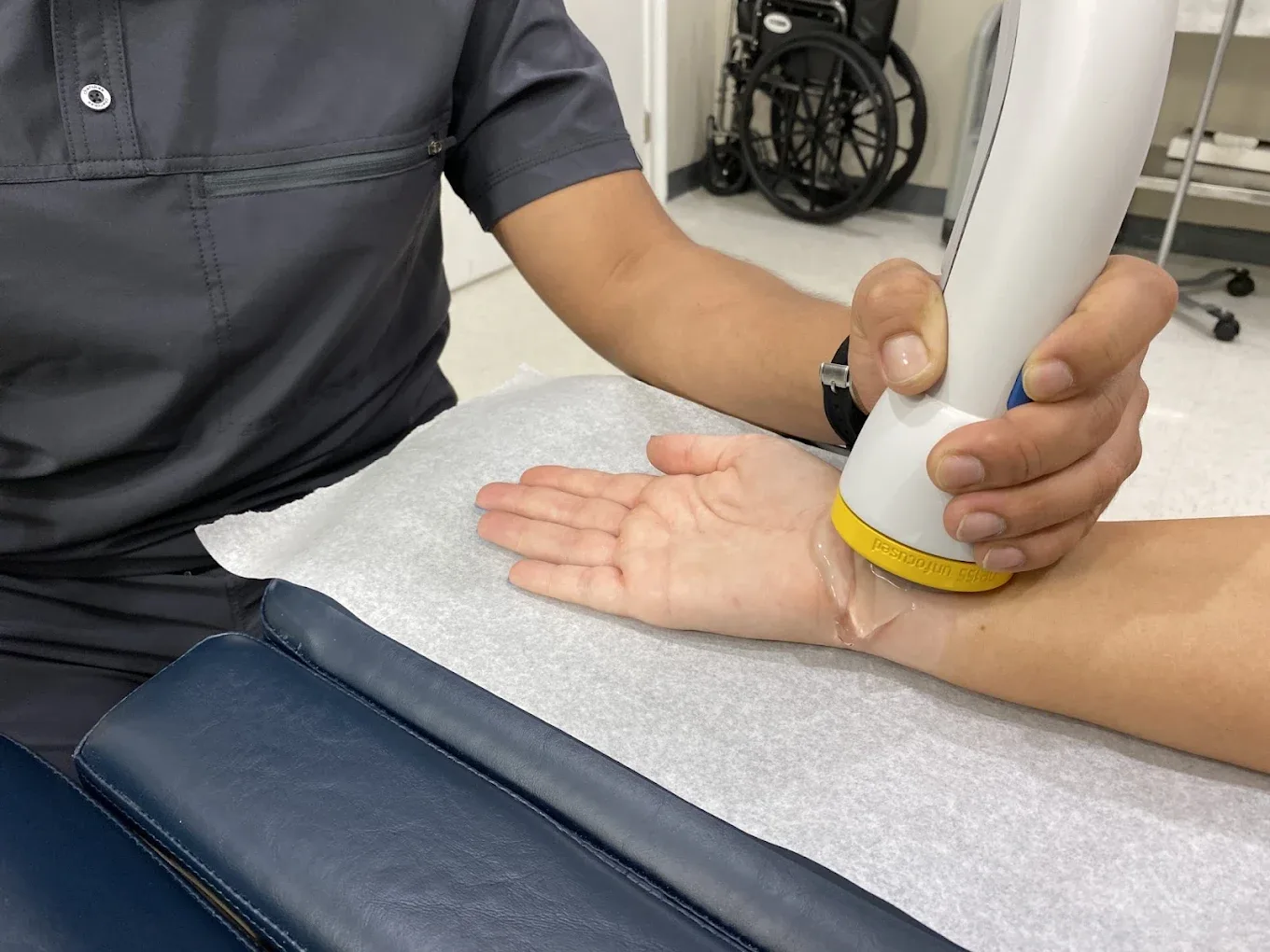
Gel on the forearm, then the applicator works over the tender attachment and along the muscle belly for a few minutes. You feel a firm tapping, most noticeable right on the sore spot. No injection, no anesthesia, no downtime — you go straight back to your day, with instructions on what to load and what to leave alone.
Getting started
The $49 new patient visit includes the consultation, an elbow, wrist and neck exam — because a cranky neck can refer pain down the arm — any diagnostics needed, and your first SoftWave treatment. SoftWave is self-pay and prices are subject to change. Book online.
Frequently Asked Questions
How long does tennis elbow take to heal?
Months more often than weeks. OrthoInfo notes that the large majority of people improve with non-surgical care, but that it commonly takes six months to a year for the tendon to settle fully. Consistency with the loading program is the biggest variable.
Should I wear an elbow strap?
A counterforce strap can take some load off the tendon attachment and helps some people get through work. It manages symptoms rather than fixing the tendon, so treat it as a support alongside strengthening, not instead of it.
Can neck problems cause elbow or wrist pain?
Yes, and it is missed often. Irritation of the nerves in the neck can refer pain, tingling or weakness into the forearm and hand. That is why the exam includes your neck and shoulder, not just the spot that hurts.