What Is SoftWave Therapy? How It Works and What Your First Session Is Like
September 21, 2026
The short version: SoftWave therapy uses a handheld applicator to deliver broad, low-intensity acoustic pressure waves into sore muscles, tendons and joints. It is non-invasive, drug-free, and takes minutes per area. At Dynamic Chiropractic in Fort Lauderdale, it's the treatment people most often come in for with shoulder and knee pain, and a first visit — consultation, exam, any diagnostics and your first treatment — is $49.
If you've heard "SoftWave" from a friend, a Facebook ad, or another patient in our waiting room and you're not sure what it actually is, this post is the plain-English answer.
What is SoftWave therapy?
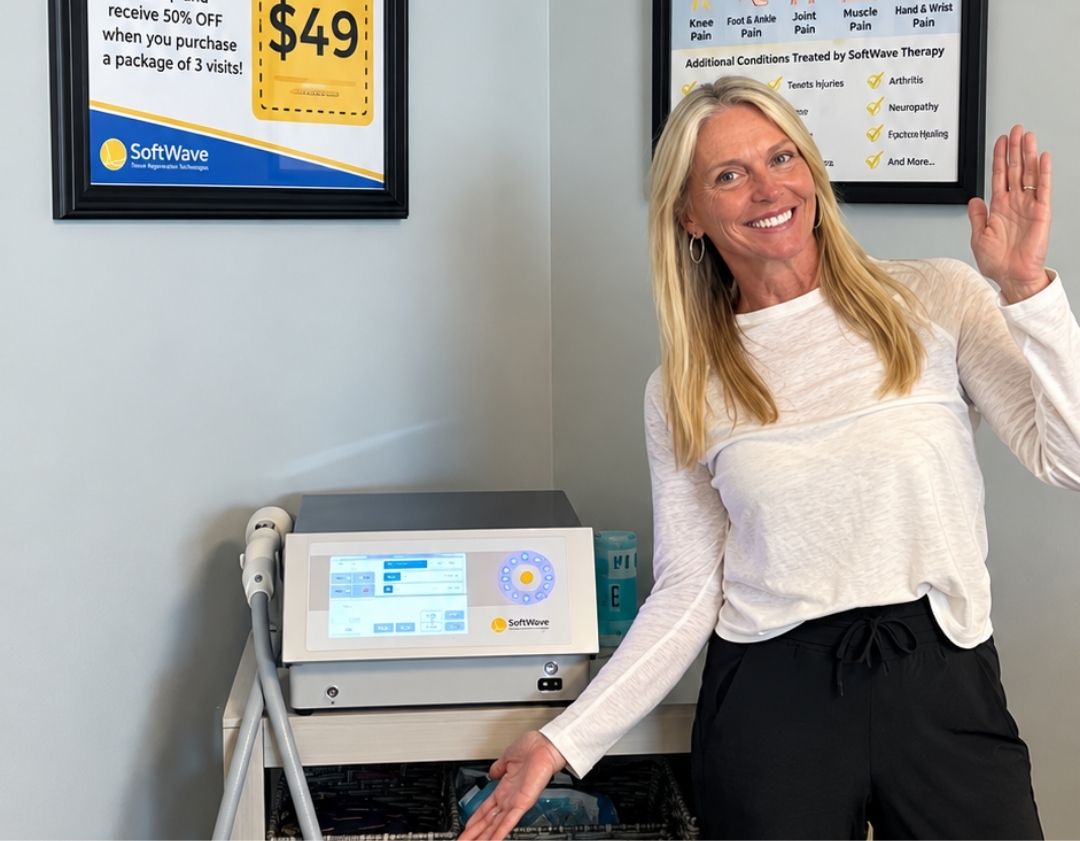
SoftWave is a brand of extracorporeal shockwave therapy — "extracorporeal" just means the energy is generated outside the body. The device we use is the SoftWave OrthoGold 100. It produces acoustic pressure waves through an electrohydraulic process: a spark discharge inside a water-filled applicator head creates a pressure wave, which passes through a soft membrane and ultrasound gel into the tissue underneath (manufacturer specifications).
Two things set SoftWave apart from the "radial" shockwave devices you may have seen at a physical therapy clinic. First, the wave is unfocused, so it spreads through a broad area of tissue rather than concentrating at a single point. Second, the energy levels are comparatively low. That combination is what lets the treatment cover a whole shoulder or knee region in one session, and it's why most patients tolerate it without numbing.
What has the FDA cleared it for?
This is the question we think every patient should ask about any device, so here is the actual answer rather than a marketing one. The OrthoGold 100 holds a 510(k) clearance from the FDA (K210451) as a therapeutic massager. Its indications for use are:
- Relief of minor muscle aches and pains
- Temporary increase in local blood circulation
- Activation of connective tissue
That's the regulatory language, and we stick to it. "Cleared" is not the same as "approved," and clearance means the FDA found the device substantially equivalent to devices already on the market — it does not mean the FDA evaluated it for any specific condition. If a clinic tells you a shockwave device is "FDA-approved to cure" something, be skeptical.
What do people use it for?
Shockwave therapy in general has been used for years in orthopedics and sports medicine for stubborn soft-tissue problems. Cleveland Clinic Canada describes it as a non-invasive treatment for chronic pain and tendon injuries and lists conditions such as plantar fasciitis, Achilles tendinopathy, tennis and golfer's elbow, calcific tendonitis and jumper's knee.
At Dynamic Chiropractic, the two areas patients ask about most are shoulders and knees — rotator cuff irritation, tendinopathy, "bone-on-bone" knees that hurt on stairs. We also see people with elbow, wrist and hand pain, heel pain, and chronic neck and back pain who want a non-surgical option before they consider injections or a procedure.
Whether SoftWave is right for your problem is a conversation, not a promise. That's why the first visit starts with an exam.
What does a session feel like?
Here's the sequence on a treatment day:
- Dr. Raby identifies the area to treat, based on your exam and where you feel it.
- Ultrasound gel goes on the skin, and the applicator head is placed directly on the area.
- The device delivers a series of pulses while the applicator is moved slowly across the region. You will feel each pulse — it's a firm, rhythmic tapping sensation deep in the tissue, and it is more noticeable over the spots that are actually irritated. Many patients say the sore spot "lights up," which is useful: it helps Dr. Raby map exactly where to focus.
- Intensity is adjustable in small steps. It is set to what you can comfortably tolerate, and you can ask for it to be turned down at any time.
- There's no anesthetic, no downtime, and nothing to bandage. You walk out and go about your day.
Some people feel looser immediately; for others, the changes come over the days after a session. How many sessions you'd need depends on the area, how long it's been a problem and how you respond — Dr. Raby will lay out a plan after the first treatment, not before it.
How does it fit with chiropractic care?
SoftWave and chiropractic adjustments address different things. An adjustment works on joint movement and how the spine and nervous system are functioning. SoftWave is directed at the soft tissue itself — the tendon, the muscle, the tissue around a joint. Plenty of our patients do one without the other. Some do both, particularly when a joint problem and a soft-tissue problem are feeding each other, like a stiff mid-back and an irritated shoulder. The exam sorts out which applies to you.
What does it cost?
SoftWave at Dynamic Chiropractic is self-pay; it is not a covered insurance service. The $49 new patient visit includes your consultation, examination, any diagnostics Dr. Raby needs, and your first SoftWave treatment. After that, treatment is priced per session or as a package, and you'll get the numbers in writing before you commit to anything. Prices are subject to change.
Is it right for you?
If you've been managing a nagging shoulder, knee, elbow or heel with rest and ibuprofen and it keeps coming back, SoftWave is a reasonable thing to try before escalating — and the $49 visit is designed so you can find out without a big commitment. Book online or call the office, and bring any imaging or prior reports you have. You can read more about Dr. Kim Raby and see the full SoftWave therapy page for details.
Frequently Asked Questions
Does SoftWave therapy hurt?
You will feel it. The pulses are a firm, rhythmic tapping that is most noticeable over irritated tissue, which is normal and expected. The intensity is adjustable in small steps and is set to what you can comfortably tolerate; no numbing is used, and you can ask for it to be lowered at any point during the session.
How many SoftWave sessions will I need?
It depends on the area, how long the problem has been there, and how your tissue responds. Dr. Raby does not quote a number before examining you. After your first visit and first treatment, she'll recommend a plan, and treatment is available per session or as a package.
Is SoftWave the same as shockwave therapy?
SoftWave is one type of extracorporeal shockwave therapy. Its device produces broad, unfocused, lower-intensity acoustic waves rather than the focused or radial waves used by some other systems. Different devices, different energy profiles — a good clinic will tell you which one they use and what it's cleared for.